No passport, no sale.
The EU's ESPR makes a Digital Product Passport mandatory for every textile placed on the EU market. Pasera builds yours, free, from your factories' own verified data. Start collecting now, before the deadline catches you.
A passport isn't a form you fill in a day
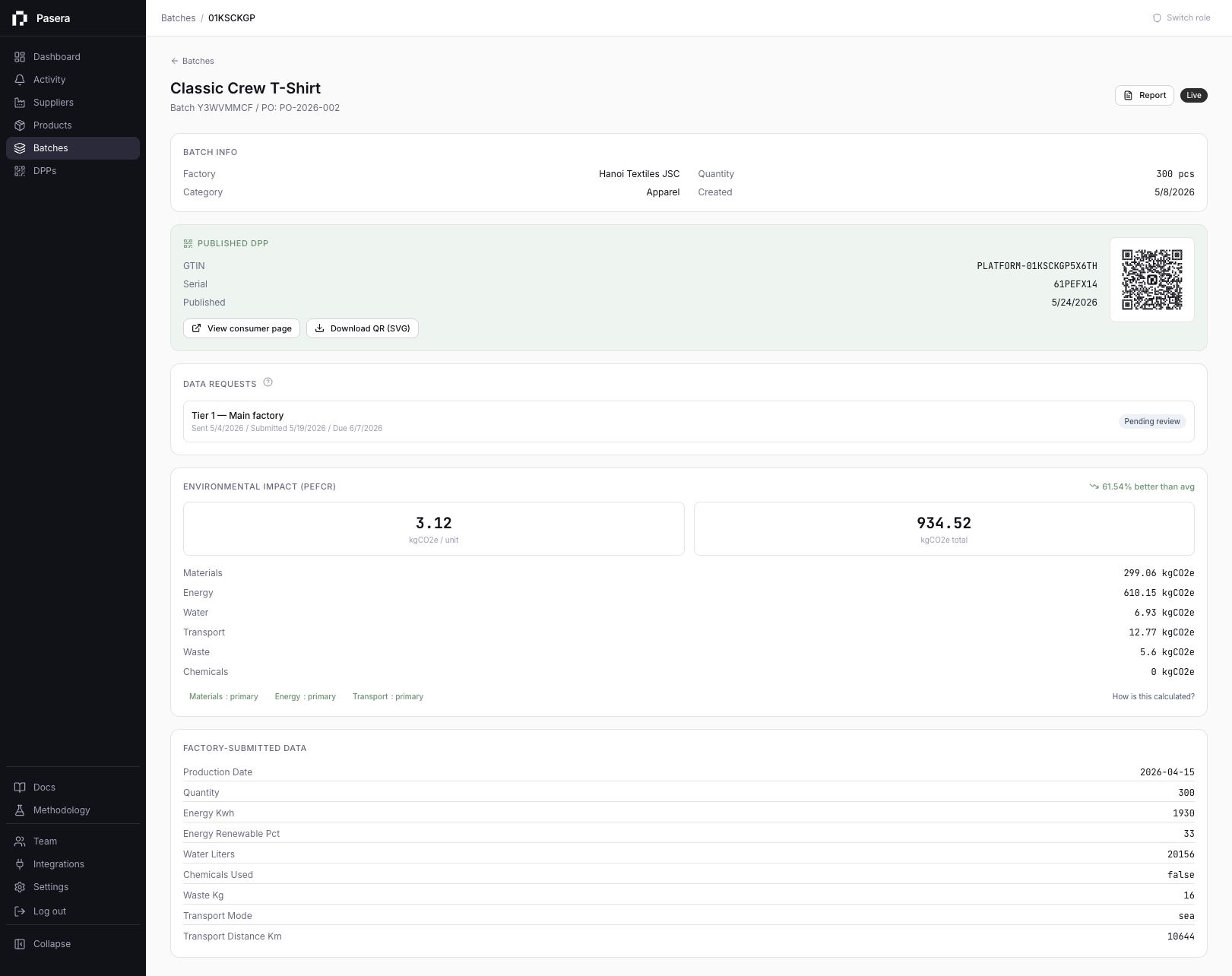
Once the rules bite, a textile without a compliant DPP can't be placed on the EU market. And a passport isn't paperwork, it's verified data from every tier of your supply chain: materials, origin, CO₂, certificates. Collecting it from factories you don't control takes 12-18 months. So the real deadline isn't 2028, it's now.
When textile DPPs are expected to become mandatory in the EU
To collect verified data across Tier 1, 2 and 3 suppliers
What full ESPR compliance costs on Pasera's free tier
Compliance, without the scramble
Your suppliers do the data entry
Send a request and your factories fill a guided form in their own language, even offline. No chasing spreadsheets across time zones.
A footprint that survives an audit
A real PEFCR carbon figure from primary factory data, and every passport is cryptographically signed, verifiable by customs, retailers and auditors. Proven, not just claimed.
Compliant for €0
Full ESPR compliance on the free tier: unlimited products, suppliers and passports. You only pay when you want to scale beyond compliance.
The latest on ESPR and Digital Product Passports

Revised Waste Framework Directive enters into force for textiles
The updated Waste Framework Directive is now live, introducing new circularity obligations for the textile sector across the EU.

ESPR's DPP requirements are coming for furniture too
Furniture News flags the approaching DPP obligations under ESPR, a reminder that the regulation reaches well beyond textiles.

DPP Goes Global: Supply Chains from Tashkent to Taipei Are Watching
From APAC factories dropping paper certificates to African exporters building DPP infrastructure, this week's news shows the passport system reaching well beyond Brussels.
Digital Product Passports, in plain terms
What is a Digital Product Passport (DPP)?
A Digital Product Passport is a structured digital record attached to a physical product, usually via a QR code. For textiles it declares origin, materials, certifications, carbon footprint and recyclability, so buyers, customs and recyclers can verify a product's data.
When will the EU Digital Product Passport become mandatory for textiles?
Under the EU's Ecodesign for Sustainable Products Regulation (ESPR), textile Digital Product Passports are expected to become mandatory around 2028. Exact dates are set per product category in delegated acts. Because verified supply-chain data takes 12 to 18 months to collect, brands should start well before the deadline.
What is the ESPR?
The Ecodesign for Sustainable Products Regulation (EU 2024/1781) is the EU framework regulation that enables Digital Product Passport requirements for each product category, starting with textiles.
How much does DPP compliance cost with Pasera?
Full ESPR compliance is free on Pasera: unlimited products, suppliers and passports at €0/month. A Pro plan at €199/month adds tools to scale beyond compliance, and Pasera is always free for your factories.
Who needs an EU Digital Product Passport?
Any business placing textile products on the EU market will need a compliant Digital Product Passport, regardless of where the products are manufactured.
How is a Pasera passport verified?
Pasera builds each passport from your factories' own primary data, calculates a PEFCR carbon footprint, and cryptographically signs every passport so customs, retailers and auditors can verify it.